A live look inside your pipes — see the blockage, break, or root intrusion with your own eyes.
Guessing about underground pipes is expensive. Video camera pipe inspection replaces the guesswork with a waterproof camera pushed through the line on a flexible cable, transmitting live footage to a monitor above ground. You watch in real time as the camera travels past joints, bends, and connections — and you see exactly what is wrong, and where.
In Alhambra, where the housing stock is overwhelmingly 30-plus years old and mature trees line the streets, the usual suspects are well known: root intrusion, cracked clay tile, corroded cast iron, and bellies where the pipe has sagged. A camera inspection identifies which of these you are dealing with before anyone talks about digging.
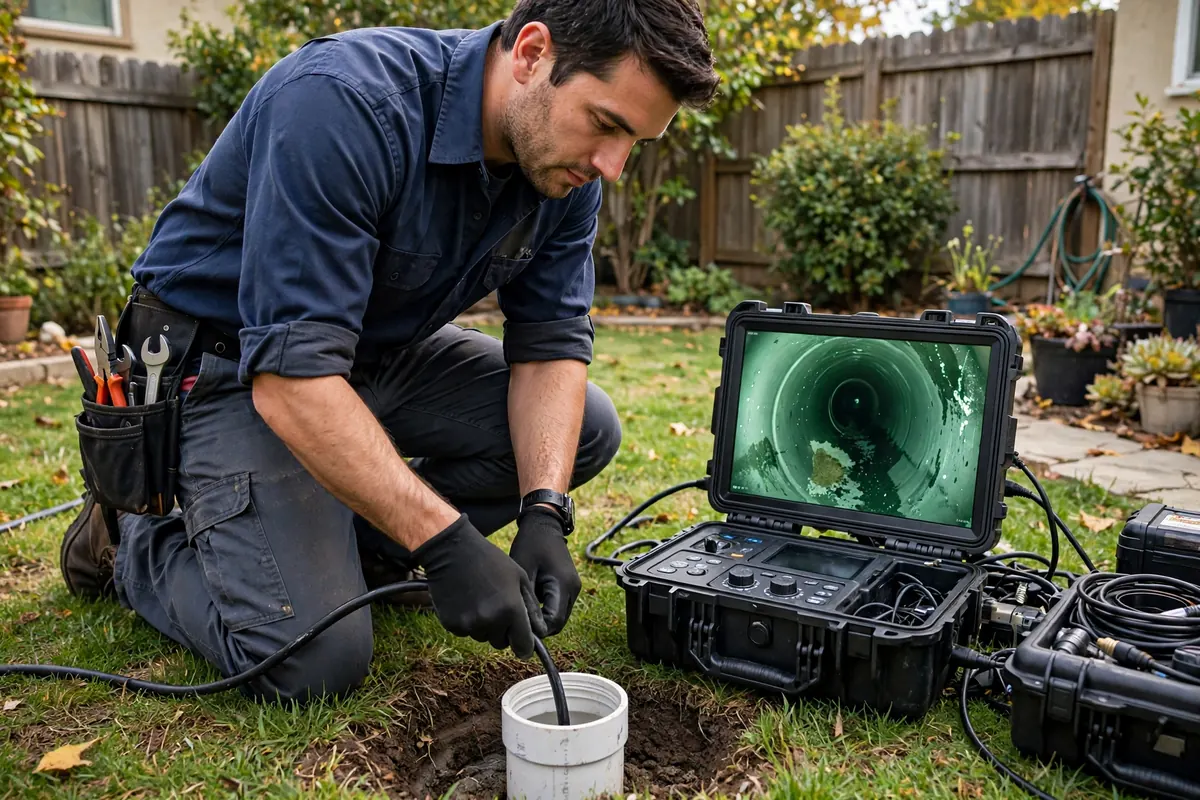
The footage reveals the interior condition of the pipe in detail: root intrusion — fine tendrils at first, then dense masses choking the line; cracks and fractures in clay or cast iron; offset joints where sections have shifted apart; bellies — low sags where waste and water pool instead of flowing; corrosion and scale narrowing old metal pipe; and outdated materials like clay tile or Orangeburg that are living on borrowed time.
An honest technical note: the camera finds defects, not leaks directly. Water escapes outward through a crack while the camera records the inside of the pipe — so what you get is the crack, the break, or the failed joint that is causing the problem. That distinction matters, and any company that blurs it is overselling.
Access is through an existing cleanout or pulled toilet — no digging to get the camera in. The push camera, with its bright LED head and self-leveling lens, travels the line while the technician narrates what appears on the monitor. A built-in transmitter in the camera head lets a locator wand above ground track its exact position and depth, so every defect is mapped to a surface location.
Most residential inspections take about one to two hours depending on the system's size and complexity. You receive the recorded video and a findings summary — documentation you can keep, share with a contractor, or hand to a home inspector.
In the Los Angeles market, a pre-purchase sewer scope has become standard due diligence for older homes — and Alhambra's housing stock makes it especially wise here. A sewer lateral replacement is one of the most expensive surprises a buyer can inherit, and it is entirely invisible during a normal walkthrough.
If you are buying a home built 20 or more years ago, with mature trees near the line's path, a history of slow drains, or a long-vacant property, a camera inspection before close of escrow is cheap insurance. The footage becomes a negotiating tool: either the line is sound, or you know exactly what you are buying into.
An inspection is diagnostic — it answers what and where, not how to fix it. Once the defects are mapped, the options depend on what the camera found: a single isolated crack may suit a trenchless spot repair, widespread deterioration may call for full relining, and a collapsed section may need excavation. Each of those is a separate decision with its own trade-offs.
What the camera gives you is the power to make that decision from evidence. No more authorizing a trench based on a plumber's hunch — you will have the footage, the locations, and the depths in hand.
We enter through a cleanout or pulled toilet — no excavation needed to begin the inspection.
The push camera travels the full line while we record live footage and narrate defects as they appear.
A locator tracks the camera head from above ground, marking each defect's position and depth on the surface.
We walk you through the footage on the monitor, explaining what each defect means in plain language.
You keep the recorded video plus a written summary of findings, locations, and recommended next steps.
See the problem with a camera — then know exactly where it is underground, and how deep.
Learn more →A new pipe inside your old pipe — rehabilitate the line without trenching the property.
Learn more →One failed joint, one isolated crack — repaired from inside the pipe, without digging up the line.
Learn more →Your water line runs from the meter to your house underground. When it leaks there, we find it — without excavating the yard.
Learn more →Every day a hidden leak runs, the water bill climbs and the damage spreads. Call now — we answer 24 hours a day.
+1 626-898-6221 ☎ Call Now Request Leak Detection Service