Find the leak under your concrete foundation — and open one precise spot instead of the whole floor.
A slab leak is a leak in the water lines running beneath or through your home's concrete foundation. Because the pipes are buried in concrete and soil, the water has nowhere visible to go — it seeps into the ground below, wicks up into flooring, or follows the path of least resistance to somewhere unexpected. By the time you notice, it may have been running for months.
This is the highest-urgency leak call we receive, and Alhambra generates more than its share: post-war ranch homes on slab foundations, copper and galvanized lines now decades past their prime, hard water, and tree roots all converge here. Slab leak detection locates the breach precisely so any repair opens a single targeted area — not a trench across your living room.
Not all slab leaks behave the same. A pressure-side leak is in a pressurized supply line — hot or cold — and it leaks continuously, 24 hours a day, whether you are using water or not. These are the leaks that run up shocking water bills and erode soil beneath the foundation.
A drain-side leak is in a wastewater line under the slab and only leaks when fixtures drain into it. It is sneakier: no bill spike, no constant sound — just slow, intermittent moisture feeding mold and undermining the slab edge. The detection approach differs for each, which is why the first step is always determining which side you are dealing with.
The causes read like a description of Alhambra's housing stock. Aging pipes: galvanized steel from the 1930s–60s corrodes from the inside out; copper from the 1960s onward develops pinhole leaks. Hard water accelerates that corrosion. Tree roots seek out moisture and can wrap, shift, or penetrate buried lines. High water pressure stresses joints and weak spots, and soil movement — including minor seismic shifting — flexes rigid pipe until it cracks.
None of these announce themselves early. A pinhole leak under six inches of concrete makes no visible sign for weeks or months while it quietly saturates the soil below. That delay is exactly why slab leaks cause disproportionate damage relative to their size.
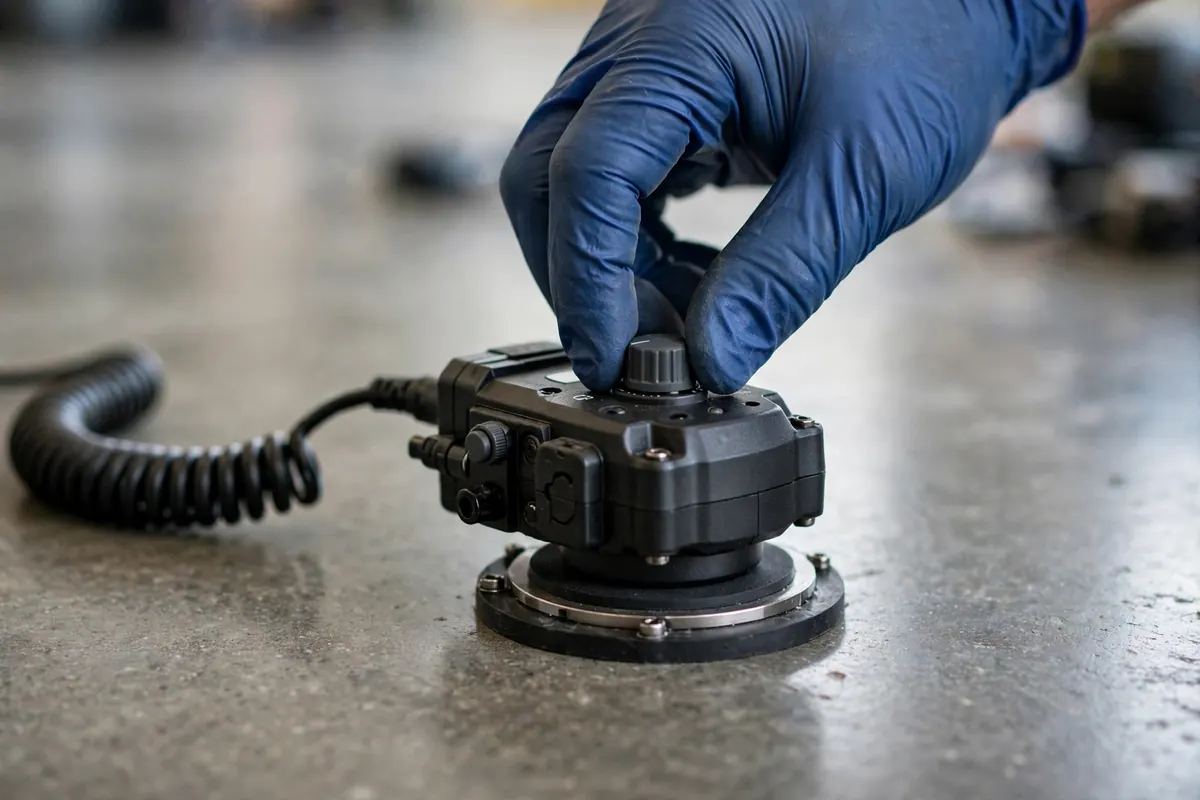
Modern slab leak detection is a disciplined sequence, not a jackhammer. It starts with a water-meter check to confirm water is actually escaping. Then pressure testing isolates the loss — hot side or cold side, supply or drain. Then acoustic listening sweeps the floor: sound travels exceptionally well through concrete, making this the primary pinpoint method for pressurized slab lines. Thermal imaging confirms, especially for hot-water leaks that paint a warm trail across the slab.
For the smallest pinholes where acoustic falls short, tracer gas finishes the job. The result is a marked spot on your floor — often within inches — so any repair opens one precise location.
Act quickly but calmly. Shut off your main water valve to stop the ongoing loss — this alone can prevent thousands in additional damage. Document what you see: photograph the warm spot, the damp area, the meter reading. Note when you first noticed each symptom; the timeline helps the technician.
Then call for detection before calling for repair. Knowing the leak's exact position first means the repair — whether it is a direct fix, a reroute, or another approach you discuss with your plumber — starts from evidence. Detection first, demolition never.
A no-use meter test confirms water is escaping the system and roughly how much.
Pressure testing determines whether the loss is on the hot-water loop, the cold supply, or a drain line.
Electronic listening sweeps the slab, following the leak's sound to its loudest point above the breach.
Infrared imaging verifies the finding — especially telling for hot-line leaks — before anything is marked.
The location is marked on the floor and documented with the line type, so repair opens one precise spot.
Electronic listening that pinpoints hidden leaks — without tearing open walls or digging up floors.
Learn more →Infrared cameras that reveal the heat signature of hidden water — without a single hole in your walls.
Learn more →Prove the leak exists — and isolate exactly which line it is on — before any pinpointing begins.
Learn more →A safe hydrogen tracer gas that escapes through the tiniest cracks — and leads our sensors straight to the leak.
Learn more →Every day a hidden leak runs, the water bill climbs and the damage spreads. Call now — we answer 24 hours a day.
+1 626-898-6221 ☎ Call Now Request Leak Detection Service