A new pipe inside your old pipe — rehabilitate the line without trenching the property.
When a sewer or drain line is cracked, root-invaded, or deteriorated along much of its length, the traditional fix is excavation — a trench from the house to the street, through landscaping, driveways, and walkways. Trenchless pipe relining offers a different path: a resin-saturated liner is installed inside the existing pipe and cured in place, forming a smooth, jointless new pipe within the old one — with no continuous trench.
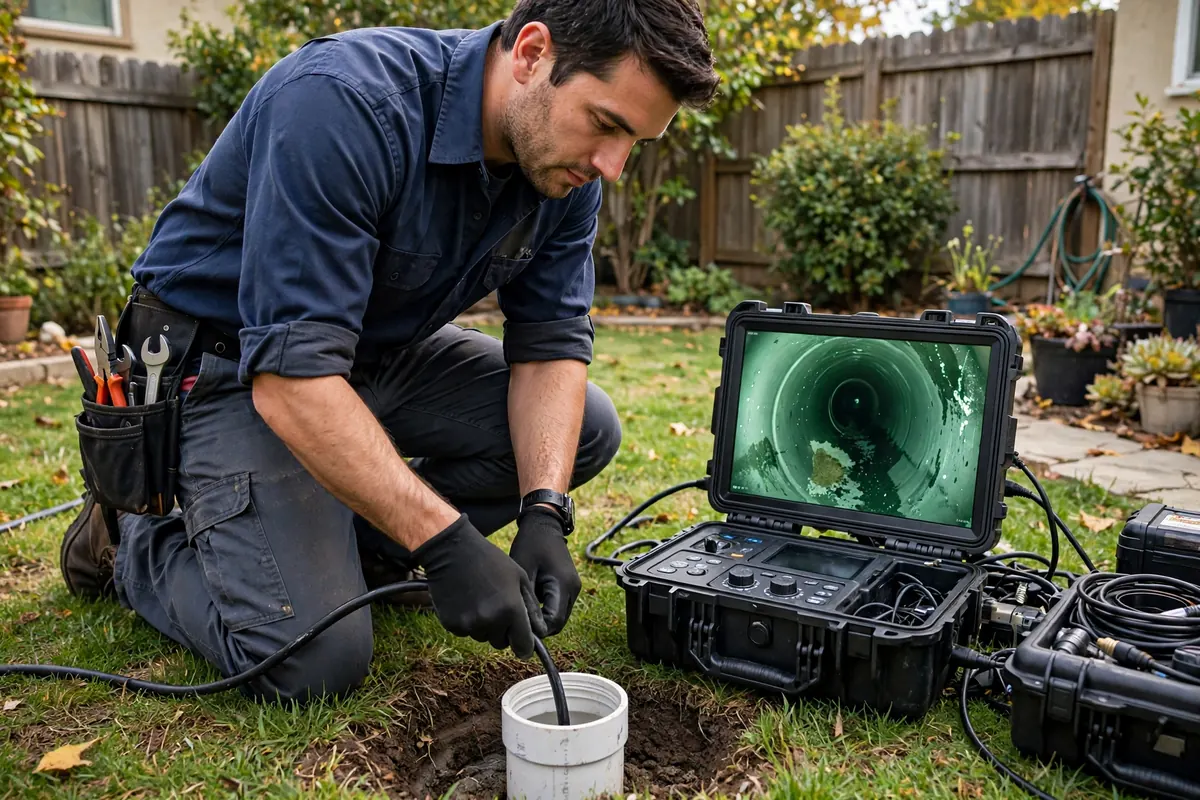
This page explains the method factually: how cured-in-place pipe (CIPP) relining works, which pipes qualify, how it compares to the alternatives, and what the process looks like. A camera inspection always comes first — relining is prescribed from footage, never from guesswork.
The process is methodical. First the host pipe is measured and cleaned so the liner will fit and bond properly. A felt or fiberglass liner is cut to the line's exact length and saturated with epoxy resin. The liner is then inserted — pulled or inverted — into the existing pipe and inflated with air or water pressure, pressing it firmly against the host pipe's interior. Finally it cures — with ambient, hot-water, or steam curing depending on the system — hardening into a rigid, jointless pipe-within-a-pipe.
Only small access points are needed at the line's ends, typically through existing cleanouts. The liner bridges cracks, seals joints against root intrusion, and restores a smooth interior for flow — all without opening the ground along the line's length.
Three trenchless-era options cover different situations, and the camera footage decides among them. Relining (CIPP) suits pipe that is damaged but still structurally intact enough to host the liner — cracks, joint failures, root intrusion, corrosion. Pipe bursting suits pipe that is collapsed, severely deformed, or undersized: a bursting head fractures the old pipe outward while pulling a new pipe through behind it. Open-trench replacement remains the answer for severe bellies (sags that relining would simply copy), extreme collapses, or lines needing regrading.
The honest decision logic: one isolated defect favors a spot repair; widespread deterioration in an intact line favors relining; collapse or grade problems favor bursting or trenching. Any contractor recommending a method before seeing camera footage is selling, not diagnosing.
Candidacy depends on material and condition, both established by camera inspection. Clay tile, cast iron, and PVC lines with cracks, joint failures, or root intrusion are commonly relined. What disqualifies a line: full collapse (nothing to host the liner), severe bellies that would be preserved in the new shape, extreme offset joints, or heavy scale that can't be cleaned to a bondable surface.
Diameter and length matter too — residential laterals are the typical application — and the line needs viable access points at its ends. A professional assessment pairs the footage with these criteria and gives you a straight answer, including when relining is not the right call.
A relining project runs in phases across one or more days depending on length and curing method: cleaning and preparation, liner saturation and installation, curing, then a post-installation camera inspection verifying the new pipe's placement and integrity. Water and drain service interruptions are limited to the work windows — far shorter than the days or weeks of an open-trench replacement.
Because requirements vary by jurisdiction and project — permits, inspections, and contractor qualifications differ — discuss the specifics, paperwork, and warranty terms directly with the contractor performing the work before authorizing anything. Get the scope, the method, and the terms in writing.
A video inspection establishes the pipe's material, condition, and defect map — relining is never prescribed without footage.
The host pipe is cleaned to a bondable surface and measured precisely for liner fabrication.
The resin-saturated liner is inserted through small access points and inflated against the host pipe's interior.
The resin hardens into a rigid, jointless new pipe within the old one, via ambient, hot-water, or steam curing.
A final camera inspection confirms placement and integrity, and the line is returned to service.
A live look inside your pipes — see the blockage, break, or root intrusion with your own eyes.
Learn more →One failed joint, one isolated crack — repaired from inside the pipe, without digging up the line.
Learn more →See the problem with a camera — then know exactly where it is underground, and how deep.
Learn more →Your water line runs from the meter to your house underground. When it leaks there, we find it — without excavating the yard.
Learn more →Every day a hidden leak runs, the water bill climbs and the damage spreads. Call now — we answer 24 hours a day.
+1 626-898-6221 ☎ Call Now Request Leak Detection Service