One failed joint, one isolated crack — repaired from inside the pipe, without digging up the line.
Not every damaged pipe needs its full length rehabilitated. Often a camera inspection reveals a lateral that is fundamentally sound except for one problem: a single cracked section, one failed joint, one root intrusion point. Targeted spot pipe repair — also called point repair, sectional lining, or a short liner — fixes just that defect from inside the pipe, leaving the healthy remainder untouched.
It is the most surgical option in the trenchless family: a short cured-in-place sleeve, typically a few feet long, installed exactly where the camera found the problem. Less material, less time, less cost than full-length lining — when the diagnosis genuinely supports it.
A spot repair is cured-in-place technology scaled down to a single location. A short liner — typically two to four feet — is saturated with resin, positioned over the defect using the camera for guidance, and expanded with a packer (an inflatable bladder) that presses it against the pipe wall. Once cured, it forms a structural patch bonded to the host pipe on both sides of the defect, bridging the crack or failed joint.
Installation happens entirely from inside the pipe through existing access points. There is no trench for the repair itself, no excavation along the line — the surface above never gets disturbed. The terminology varies by contractor — point repair, spot repair, sectional liner, short liner, pipe patch — but the concept is identical: fix the defect, spare the line.
The camera footage makes this call, and the logic is straightforward. Spot repair fits one isolated defect in an otherwise healthy line — a single crack, one bad joint, one intrusion point. Full-length relining fits widespread deterioration: cracks at multiple joints, root intrusion at several points, general corrosion along the run. Neither fits a collapsed section or a severe belly — those need bursting or excavation.
Be cautious in both directions. Recommending full relining for a single defect oversells; recommending a spot repair when the footage shows five failing joints undersells and guarantees a return visit. The defect count on the video is the honest arbiter — ask to see it and count with the technician.
After the defect's exact position is confirmed — camera footage plus above-ground locating so the crew knows precisely where they are working — the line is cleaned at the repair zone to ensure the patch bonds. The resin-saturated short liner is loaded onto the packer, navigated to the defect under camera guidance, and the packer is inflated, pressing the liner firmly against the pipe interior across the damaged area.
Curing follows — ambient or accelerated depending on the system — and then the packer is deflated and withdrawn, leaving the structural sleeve in place. A final camera pass verifies the patch's position and seal. The whole procedure is typically completed within a single work session, with the line returned to service the same day.
Honesty cuts both ways: sometimes the 'single defect' turns out to have company. If the camera reveals multiple failing joints or cracks spread along the line, individual spot repairs stop making sense — two or three patches approach the cost of a full liner while leaving the remaining weak joints to fail later.
A straight assessment will tell you when the defect count crosses that line and recommend full-length relining instead. That recommendation should come with the footage to back it up — timestamps and defect locations you can verify yourself. The goal is the right repair at the right scope, not the smallest invoice today followed by the same problem next year.
Footage confirms a single isolated defect in an otherwise sound line — the qualifying condition for spot repair.
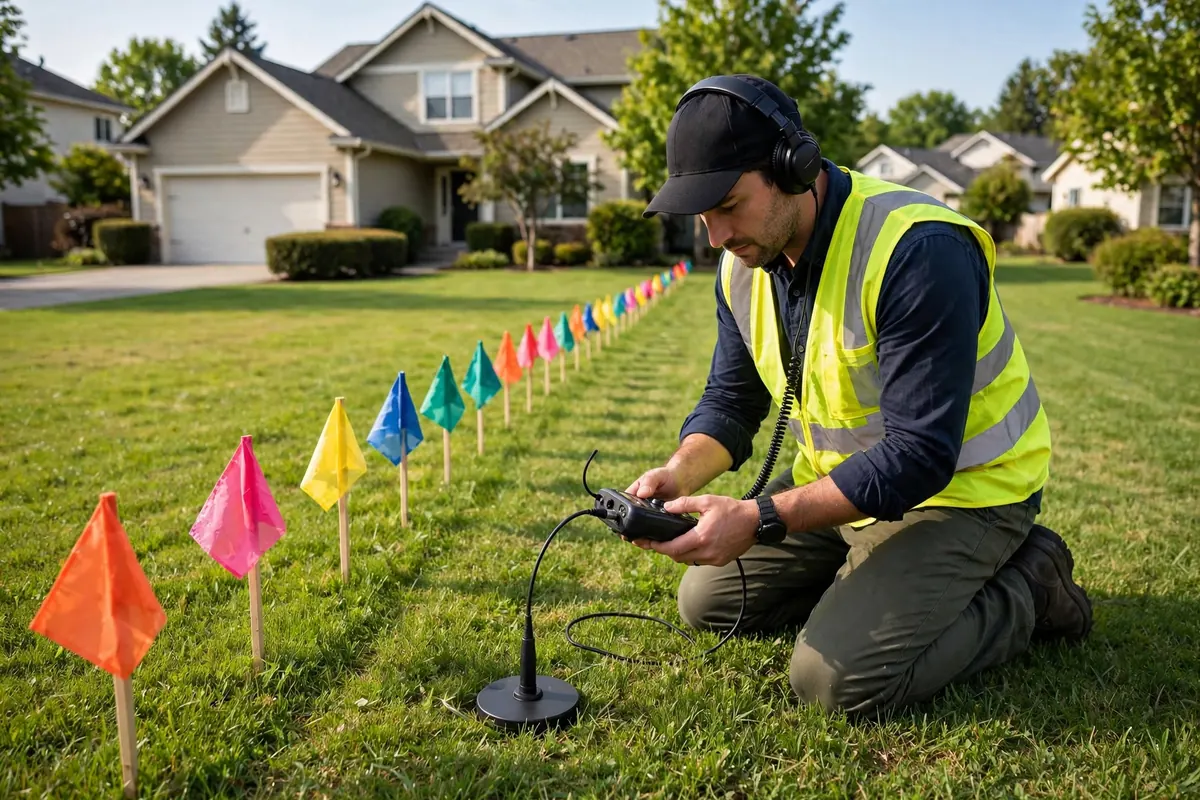
Above-ground tracking marks the defect's exact surface position so the crew works at precisely the right point.
The repair zone is cleaned to ensure the resin sleeve bonds solidly to the host pipe.
The resin-saturated short liner is positioned over the defect by camera guidance and expanded with a packer.
The patch cures into a structural sleeve; a final camera pass confirms position and seal before the line returns to service.
A live look inside your pipes — see the blockage, break, or root intrusion with your own eyes.
Learn more →A new pipe inside your old pipe — rehabilitate the line without trenching the property.
Learn more →See the problem with a camera — then know exactly where it is underground, and how deep.
Learn more →Your water line runs from the meter to your house underground. When it leaks there, we find it — without excavating the yard.
Learn more →Every day a hidden leak runs, the water bill climbs and the damage spreads. Call now — we answer 24 hours a day.
+1 626-898-6221 ☎ Call Now Request Leak Detection Service