A safe hydrogen tracer gas that escapes through the tiniest cracks — and leads our sensors straight to the leak.
Some leaks are too small, too deep, or in too noisy an environment for even the best listening equipment to hear. Tracer gas leak detection solves that differently: the suspect pipe is isolated and filled with a special gas blend — 5% hydrogen, 95% nitrogen — and a sensitive detector sweeps the surface above. Hydrogen is the smallest molecule in existence, so it slips through microscopic cracks, rises through soil and concrete, and the highest sensor reading marks the leak.
This is the method professionals turn to when acoustic results are inconclusive — plastic pipework that muffles sound, deeply buried lines, or sites with too much background noise. If you are searching for this service, note one important distinction explained below: tracer gas for water pipes is completely different from natural-gas leak detection, which is a separate safety matter.
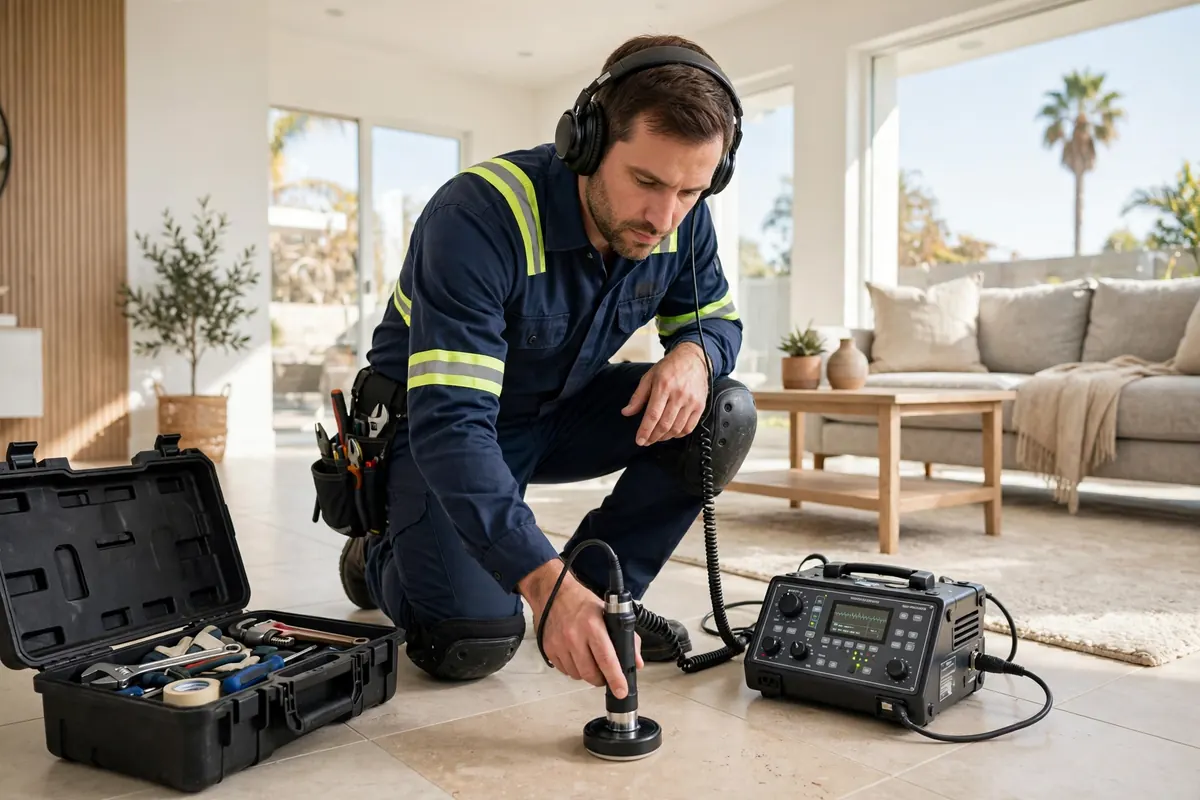
The process has four stages. First the suspect line is isolated and drained — valves are closed so the test section stands alone. Then it is charged with the hydrogen-nitrogen blend at a controlled pressure. Hydrogen escapes wherever the pipe is breached, even through a pinhole far too small to make audible noise, and migrates upward through the ground or slab.
Finally the technician sweeps the surface with a calibrated gas detector, often using a bell or carpet probe held to the ground. Readings rise as the probe nears the leak and peak directly above it, typically narrowing the location to within a few feet. Small pilot holes through dense material can help the gas reach the surface faster where needed.
Yes. At 5% concentration, the hydrogen-nitrogen blend is certified non-flammable, non-toxic, and non-corrosive — hydrogen only becomes combustible well above this concentration, and nitrogen is an inert carrier gas already abundant in the air you breathe. The same blend is used across the plumbing and leak-detection industry worldwide.
The gas leaves no residue, causes no corrosion, and dissipates harmlessly into the atmosphere. Once the test is complete, the line is purged and returned to normal service.
Acoustic listening depends on sound traveling through the pipe and ground — and some situations defeat it. Plastic pipes absorb sound rather than carrying it. Deep lines lose their signal before it reaches the surface. Noisy environments — busy streets, commercial equipment, running appliances — drown out faint leak noise. Tracer gas bypasses all three problems because it follows physics, not acoustics: gas rises regardless of pipe material or background noise.
It is also the go-to for the smallest leaks. A pinhole weep that barely moves the needle on a listening device still releases enough hydrogen molecules for a modern detector to register. When precision matters and the leak is elusive, this is the method that closes the case.
Tracer gas leak detection is a diagnostic method for water pipes. It is completely different from natural-gas leak detection, which concerns fuel gas lines and is a safety emergency. If you smell gas — a rotten-egg odor — do not call a leak detection company first: leave the property and call your gas utility or 911 immediately.
The two services share only the word 'gas.' Our tracer gas work involves pressurized drinking-water and heating lines, using a safe inert blend, and carries none of the explosion risk associated with fuel-gas leaks. Keeping the distinction clear protects everyone.
Tracer gas is powerful but not instant. The pipe section must be isolated and drained for the test, which means the water is off during the procedure — something to plan around in multi-occupancy or commercial buildings. The gas also needs time to migrate through dense soil or thick concrete; a shallow leak may register in minutes, while a deep one takes longer.
And like every method, it works best as part of a sequence: a pressure test first confirms which line is losing water, tracer gas pinpoints the breach, and the result is a marked location ready for a targeted repair.
The suspect section is valved off and drained so the test gas fills only the pipe under investigation.
The line is filled with the 5% hydrogen / 95% nitrogen blend at a controlled, material-safe pressure.
Hydrogen escapes through the breach and rises through soil or concrete toward the surface.
A calibrated detector sweeps the surface; the peak reading marks the leak's position within a few feet.
The line is purged, restored to service, and the marked location is documented for repair planning.
Electronic listening that pinpoints hidden leaks — without tearing open walls or digging up floors.
Learn more →Find the leak under your concrete foundation — and open one precise spot instead of the whole floor.
Learn more →Your water line runs from the meter to your house underground. When it leaks there, we find it — without excavating the yard.
Learn more →Prove the leak exists — and isolate exactly which line it is on — before any pinpointing begins.
Learn more →Every day a hidden leak runs, the water bill climbs and the damage spreads. Call now — we answer 24 hours a day.
+1 626-898-6221 ☎ Call Now Request Leak Detection Service